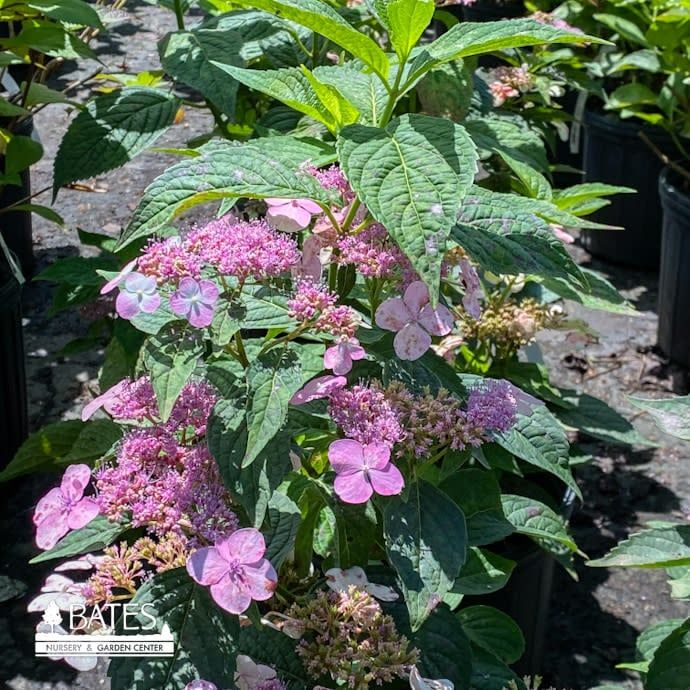
#1 Hydrangea mac var serr Blue Billow/ Mountain/ Lacecap Blue to Pink
SKU GL311010
$19.99
Blue Billow Hydrangea dazzles with clouds of soft blue lacecap blooms against dark green foliage that turns red-purple in fall.
In stock: 1 available
1
Save this product for later
#1 Hydrangea mac var serr Blue Billow/ Mountain/ Lacecap Blue to Pink
Product Details
SCIENTIFIC NAME: Hydrangea macrophylla var. serrata 'Blue Billow'
COMMON NAME: Blue Billow Hydrangea
GARDEN SIZE: 4 to 5 feet tall by 4 feet wide
GROWTH RATE: Fast
USDA ZONE: 6 to 9
EXPOSURE: Dappled sunlight to partial shade; prefers cool, sheltered sites.
WATER & SOIL:Prefers moist, well-drained, fertile soils rich in organic matter. Adapts to clay, loam, or sandy soils with acidic to neutral pH. Consistent summer moisture promotes better flowering and prevents leaf scorch.
HABIT (FORM): Compact, mounded shrub
FOLIAGE: Deciduous; Dark green serrated leaves turning red-purple in late summer and fall
FLOWER COLOR: Blue (may vary with soil pH)
FRAGRANCE: None
BLOOM FORM: Lacecap; Delicate, globose clusters of small florets
BLOOM TIME: Early summer to fall
PLANT ORIGIN: Japan and Korea; naturally occurs in cool, mountainous woodland habitats
WILDLIFE SUPPORT: May provide some nesting sites and shelter for birds and small mammals, but does not serve as much of a host for local insects and wildlife. May provide food for insects in the spring.
FERTILIZING: Feed in early spring with organic compost or a balanced, slow-release fertilizer. Avoid high-nitrogen formulas that encourage leaf growth at the expense of blooms.
PRUNING: Blooms on old wood. Minimal pruning needed. If pruning, do so immediately after flowering to preserve next year’s buds. Remove weak or winter-damaged stems in early spring while hydrangea is still dormant.
TOXICITY FLAGS: Mildly toxic if ingested (contains cyanogenic glycosides). Some traditional use of the leaves as a tea is reported, but do your own research thoroughly before considering for yourself!
USES: Borders, shaded woodland gardens, specimen, mass planting.
You May Also Like
Powered by Lightspeed
Display prices in:USD